An Ordinary Sheet of Steel Cannot Stop Flames
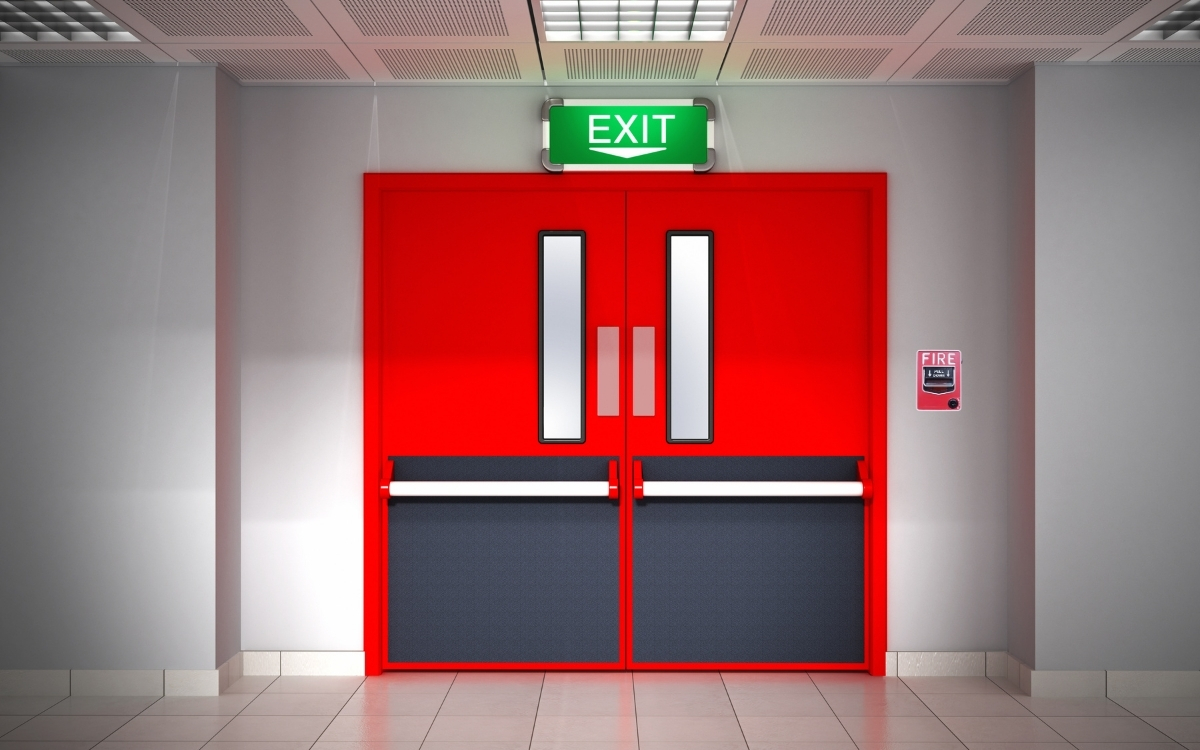
There is a question I often pose to the contractor clients who tour our production facility: "Doesn't a standard steel door withstand fire? What sets a fire door apart from it?" In most people's minds, a fire door is nothing more than a simple piece of metal painted red, with a horizontal iron bar (a panic bar) fitted across it. The reality, however, is entirely different. A door made of nothing but sheet steel turns into an oven lid during a fire; within seconds it conducts the heat of the flame to the other side, glows red-hot, and warps until it jams shut. So why does a genuine fire door protect you from fire, and how does it create a safe escape corridor in the middle of that terrifying inferno?
The answer lies in the thermodynamic engineering concealed within the door's layers. When we manufacture these doors, we focus not only on blocking the passage of the flame, but on blocking the passage of heat and of the real killer: toxic smoke.
The Insulating Power of Rock Wool and Fire-Resistant Plasterboard
When flames begin to lick one face of the door, the ambient temperature reaches 800 to 1000 degrees Celsius in a very short time. This immense thermal energy works its way through the steel sheet and into the door. If the interior is hollow or filled with cheap material, the air on the other side of the door instantly reaches its ignition point as well. To prevent this, we use fire-resistant rock wool panels of high density (120-150 kg/m3) derived from basalt rock, along with special fire-rated plasterboard, in the door's internal core. These materials trap the heat. While the temperature in the corridor is 1000 degrees, the temperature on the door's fire-escape-facing side remains at a level that will not burn people's hands, allowing them to flee in a panic.
The Chemical Reaction That Smothers Smoke: The Intumescent Seal
Reports from fire brigades confirm that the overwhelming majority of fatalities in fires occur not from burning, but from carbon monoxide poisoning. A small operating gap must always exist between the frame and the leaf of a fire door. This is precisely where toxic smoke tries to seep through these millimetre-wide gaps. Into these gaps we place special "intumescent" (heat-expanding) fire seals. The moment the ambient temperature exceeds 100 degrees, this thin seal undergoes a chemical reaction and expands to 10-15 times its normal volume. It plugs the entire gap between the frame and the door like an almost petrified sponge. From that moment on, the possibility of either the flame or the smoke crossing that corridor is eliminated.
Never trust any product that fails the furnace tests (EI60, EI120) conducted in internationally accredited laboratories. Those doors fitted in your building are not mere fixtures procured for the sake of procedure; they are the last line of defence to which the people inside will cling for their lives.