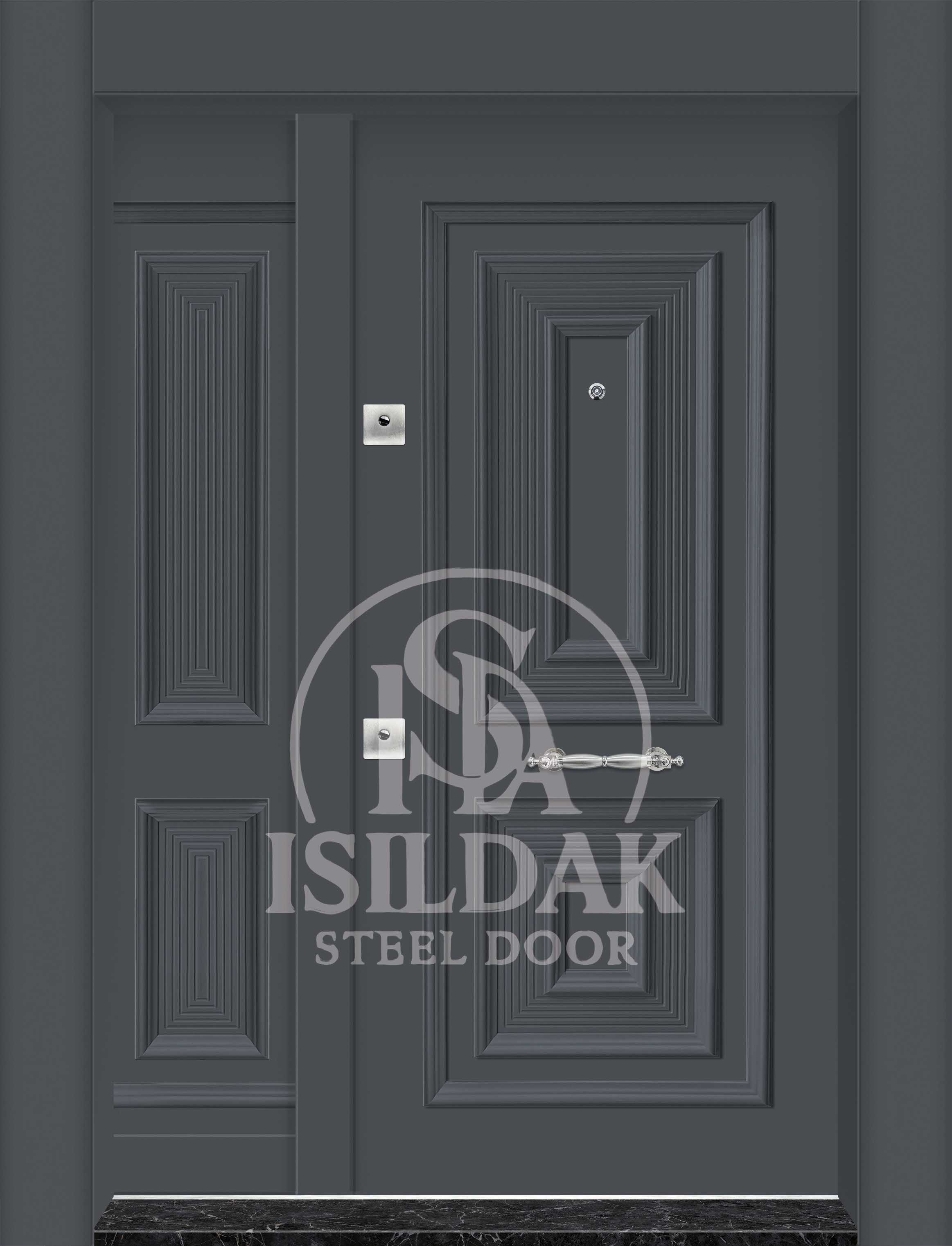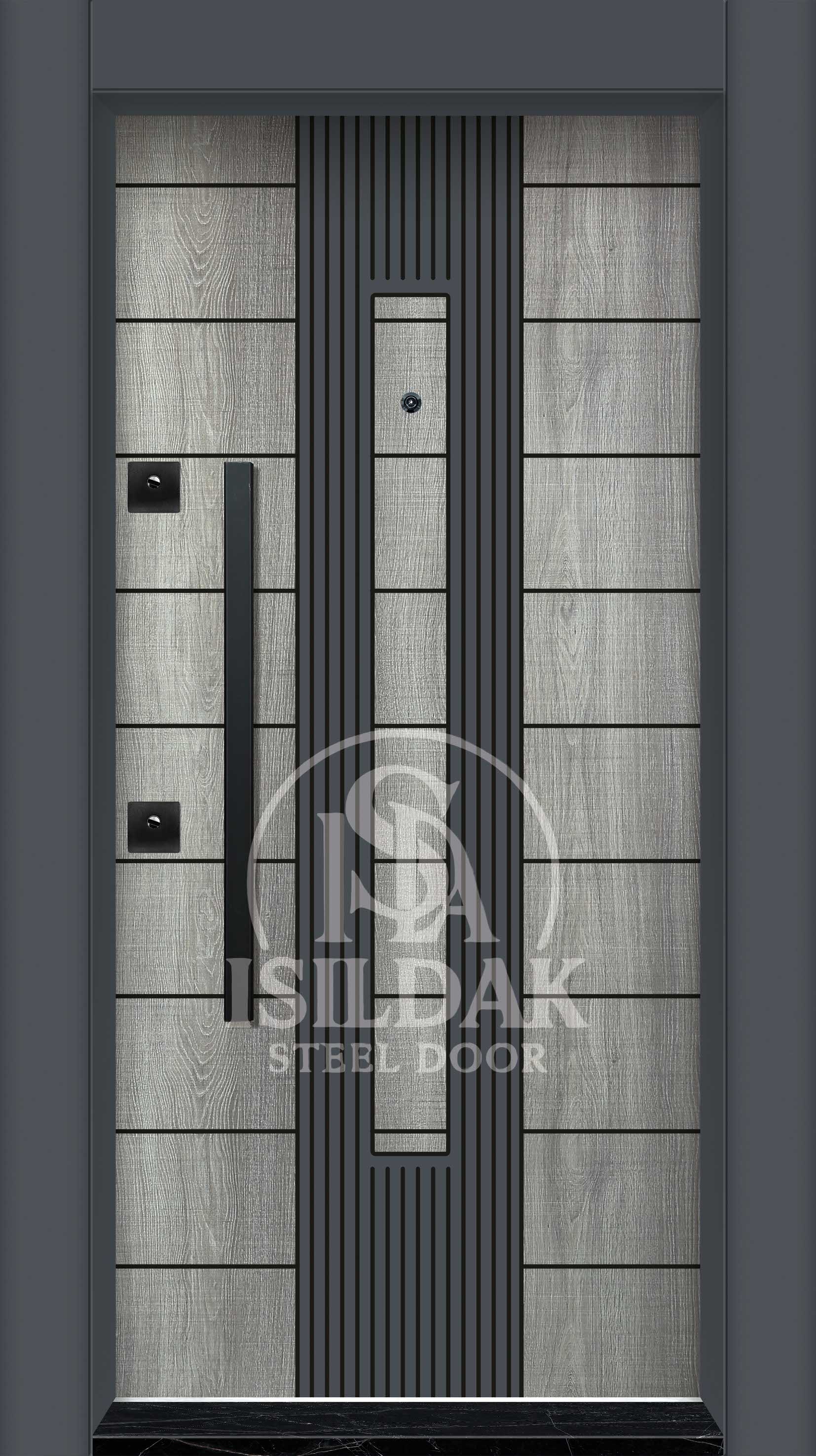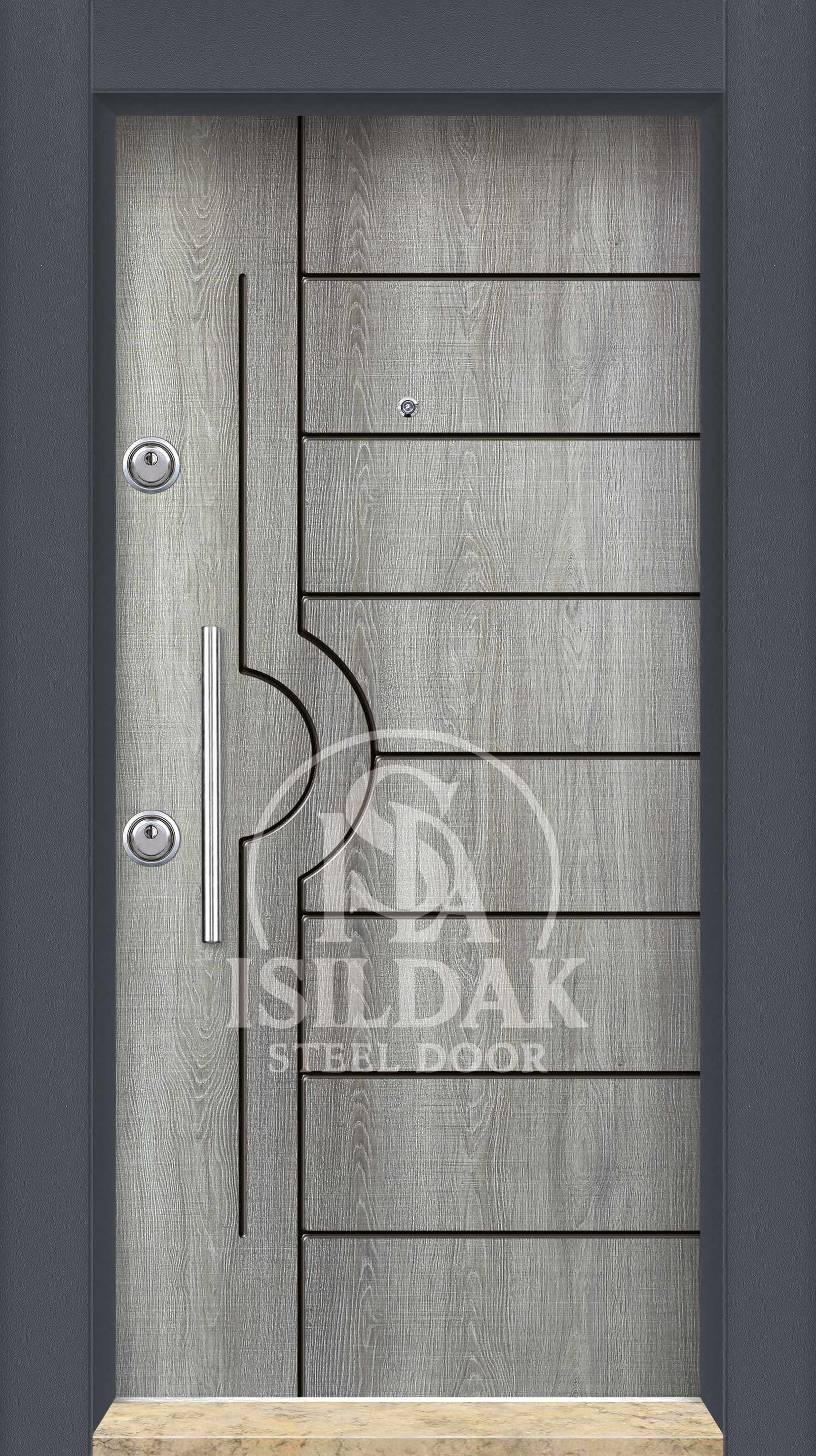
A villa door cannot be evaluated in the same category as the entrance door of an apartment flat. A flat door sits in a heated corridor, insulated from the weather; a villa door, by contrast, is often exposed directly to the outdoors — to rain, sun and seasonal changes. On top of that, villa entrances have to be wider, more imposing and fully integrated with the architecture. These three realities — resistance to external elements, top-tier security and aesthetic coherence — turn choosing a villa door from a simple “buy a door” decision into a far more layered engineering matter. In this guide we address the criteria that genuinely matter and the questions you should ask when making your decision.
The Difference Between a Villa Door and a Flat Door
The most common misconception is to assume that a standard steel door used in a flat will also suit a villa entrance. Yet a flat door sits in a climate-controlled environment enclosed on both sides; a villa door has to behave like a facade element.
- Exposure: A flat door never sees rain, snow or direct sun; a villa door is open to UV, humidity and temperature swings all year round.
- Dimensions: A flat door is usually 90–100 cm; villa entrances favour single/double leaves over 110 cm or wide openings with sidelights.
- Surface: MDF/lacquer surfaces designed for interior use swell outdoors; the outward-facing surface must be an exterior-grade finish.
- Structural load: A wide leaf is heavier, significantly increasing the load on the hinges, frame and anchoring.
First Axis: Resistance to External Elements
The toughest test for a villa door is the weather; a poorly chosen door will show swelling, fading, rusting and hardened gaskets within just a few years.
UV, Colour Fastness and Water Management
The sun's ultraviolet (UV) rays are the arch-enemy of exterior surfaces. Exterior-grade villa doors use electrostatic powder coating (polyester-based) or exterior lacquers with high UV resistance; because powder coating is hardened by oven-curing, it is markedly more resistant to impact and UV than standard oil paint. Water, meanwhile, wears the door down by seeping in through the surface and pooling at the bottom threshold; this is why a perimeter gasket and a threshold water-drainage profile are critically important. The polyurethane foam inner core serves as both thermal insulation and a moisture barrier. Having a canopy above the door is one of the most effective measures for extending its lifespan.
Seaside: Salt and Corrosion
In seaside villas, salty moisture in the air accelerates corrosion and rust begins quickly on standard steel. In these areas, two technical features should be sought:
- Galvanised (zinc-coated) sheet: The zinc layer added to the steel surface acts as a “sacrificial” barrier against corrosion and lasts many times longer in salty air than non-galvanised sheet.
- Stainless steel hardware: Hinges, lock cylinders, handles and screws should be stainless (inox) or have a corrosion-resistant coating; otherwise the body holds up while the hardware rusts.
Whether all metal surfaces have been treated with a primer and a protective topcoat before installation determines the door's long-term performance in a marine climate.
Second Axis: Security
Owing to its detached location, a villa carries a higher expectation of security; the low density of neighbours and concealed approach points such as the garden make the entrance door's deterrent effect critical.
Multi-Point Locking System
A door that locks at a single point can be opened when the frame is forced at one spot. A multi-point lock, on the other hand, secures the leaf to the frame at typically three to five points — top, middle and bottom; this distributes the forcing load along the length of the leaf and makes prying attempts considerably harder. The lock cylinder is expected to use an anti-snap barrel.
RC Resistance Class (TS EN 1627)
The international reference that measures a door's resistance to forced entry is the RC (Resistance Class) classes in the TS EN 1627 standard. This standard tests the door under real intervention scenarios using hand tools:
- RC2: Resists opportunistic forcing with simple tools such as a screwdriver, pliers and wedge; a common entry level for residential entrances.
- RC3: Additionally resists more powerful tools such as a crowbar/lever for a certain period; a frequently preferred level for villa entrances.
- RC4 and above: Requires resistance to heavy equipment such as saws, sledgehammers and power tools; considered in high-security projects.
The RC class expresses the performance not just of the leaf but of the leaf + frame + lock + installation as a whole; even if a door is RC-rated, that resistance loses its meaning when it is installed incorrectly.
Third Axis: Elegance and Custom Sizing
The villa door is the architectural element that gives the home its first impression; it is expected to harmonise with the facade, the garden and the interior. A wide aesthetic range is possible without compromising on security and durability.
Pivot and Wide Leaf
The most sought-after villa entrance solution of recent years is the pivot door. Instead of classic side hinges, the leaf rotates around an axis (the pivot spindle) at the top and bottom; because it distributes the centre of gravity in a balanced way, it allows even very wide, heavy leaves of 120 cm and above to open effortlessly. On a wide leaf, the inner skeleton (the steel frame) being sufficiently rigid against torsion is the technical condition for the aesthetics to be long-lasting.
Harmony with Surface and Architecture
In terms of aesthetics, villa doors benefit from a wide material palette: exterior-grade laminated wood veneers, exterior lacquer, wood-textured composite panels and metal-glass combinations. The critical balance is between appearance and durability; an exterior-certified material can be used on the outward-facing surface, while a different finish in keeping with the decor can be used on the inward-facing surface. Since villa entrances rarely conform to standard dimensions, the door needs to be made to custom size (manufactured to fit the architecture); the right approach is to design the door to the dimensions and facade line of the space, rather than fitting the space to the door.
Measurement, Site Survey and Installation
Even the highest-quality door loses its value when it is measured wrongly and installed poorly. The correct process begins with an on-site survey before the sale; during the survey, the opening dimensions, the wall structure (brick, concrete, aerated concrete), the opening direction and the outdoor exposure are evaluated. The most common problem with wide, heavy leaves is the leaf sagging over time on the hinge side; to prevent this, it is essential that an adequately rated heavy-duty hinge or a pivot system, a rigid steel frame, and the frame being fixed level to the load-bearing wall with sufficient steel anchoring are all in place.
Frequently Asked Questions
Which RC class is sufficient for a villa door?
Because of their detached location, villas are generally evaluated with RC2 as the lower limit and RC3 as the safer choice. It should not be forgotten that the RC class belongs not just to the leaf but to the frame-lock-installation as a whole; without correct installation, the class on the label does not reflect reality.
Which material is suitable for a seaside villa?
Because salty moisture accelerates corrosion, a galvanised (zinc-coated) sheet body and stainless/corrosion-resistant hardware should be preferred. Having all metal surfaces treated with a primer and a protective topcoat extends the door's lifespan markedly.
Will a wide villa door sag over time?
When inadequate hinge capacity and insufficient anchoring are used, wide and heavy leaves can sag. This risk is eliminated through professional installation with a heavy-duty hinge or pivot system, a rigid steel inner frame, and the correct number of steel anchors into the wall.
Işıldak Çelik Kapı approaches the villa door with the discipline of a manufacturer: at its production facility in Sancaktepe, Istanbul, custom-size and exterior-grade solutions are produced, with delivery and installation provided across Istanbul and the European Side. Free site surveys and expert consultancy are offered so that the right decisions on dimensions, materials and installation can be made on the spot; this way, your villa's entrance becomes resistant to external elements, secure and in harmony with your architecture all at once.