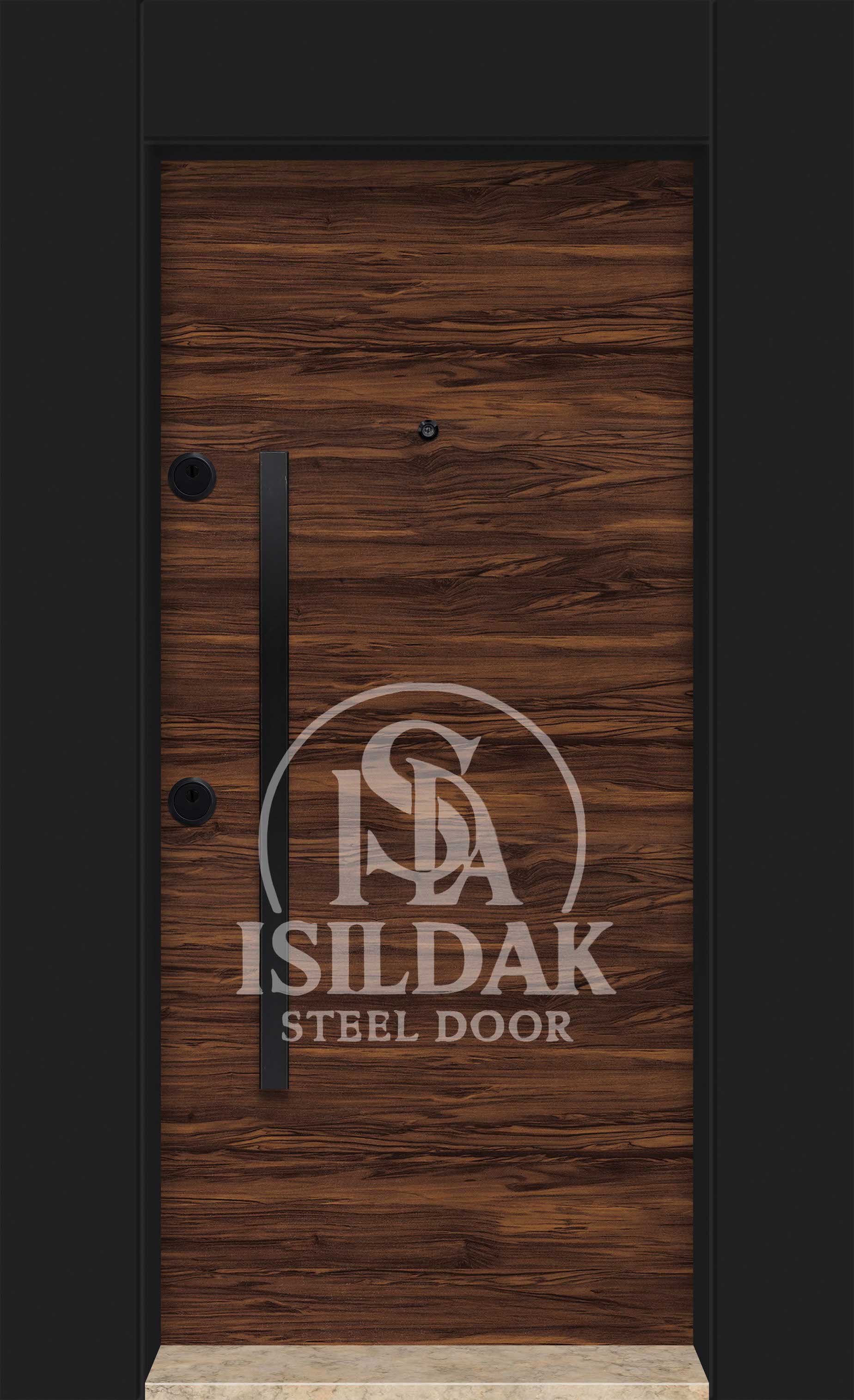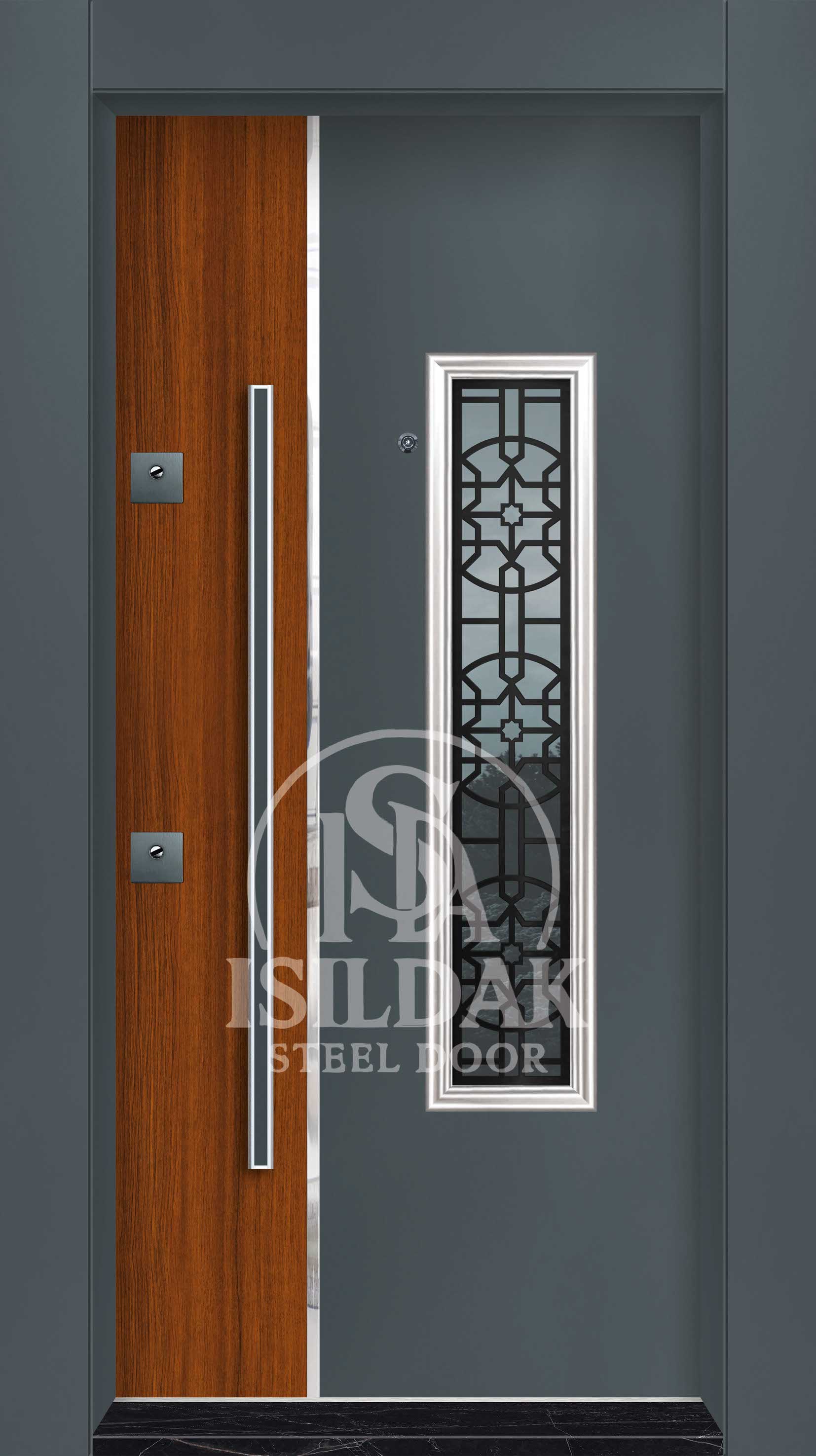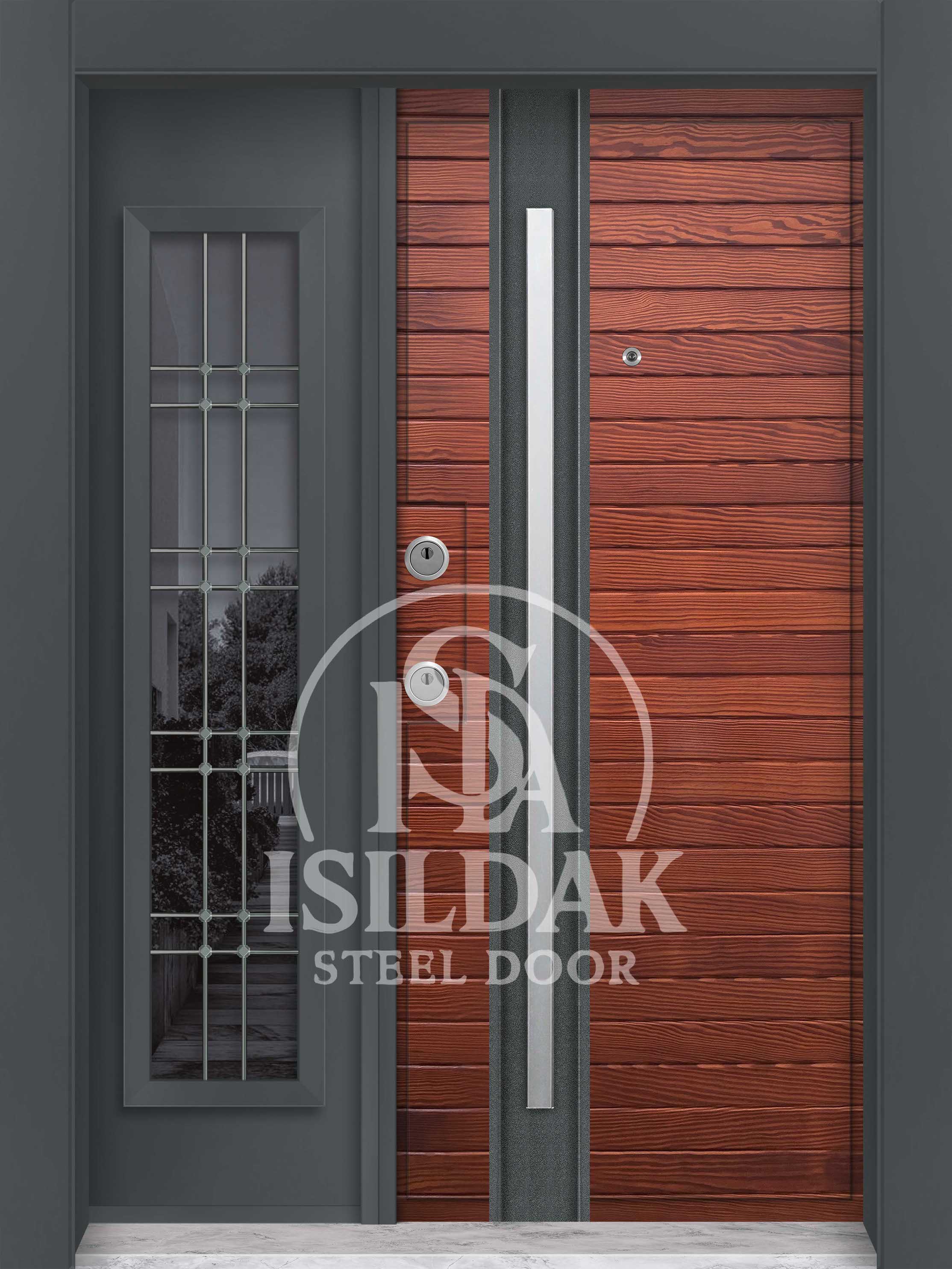
When buying a steel door, the first thing that comes to mind is most likely security: how many points it locks at, the thickness of the sheet metal, what class the lock belongs to. Yet what determines the surface you see every day and expect to look the same for decades is not the body itself but the surface finish applied to it. The very same steel body can look modern with lacquer, classic with wood, durable with laminox, or economical with a PVC membrane. What is more, this choice is not purely aesthetic: the finish also directly determines how the surface will react to sunlight, moisture and scratching. In this guide we compare the four main finish types and give a clear answer to the question of "which finish suits whom."
Why Is the Surface Finish So Important?
The skeleton of a steel door is generally produced from DKP sheet (cold-rolled steel); among serious manufacturers, a polyurethane-filled body is the standard. The outer face of the body, however, is bare metal; the finish applied over it acts as a barrier that prevents moisture from reaching the metal, a shield against the sun, and the first line of defense against scratching. An important detail: while the outer face of the door is exposed to sun and rough use, the inner face is sheltered; for this reason, in most quality doors the two faces can be finished with different coatings. In other words, there is no single answer as to the "best finish"; the right answer changes according to location, expectation and budget.
Lacquer (Paint) Finish: Modern and Repairable
Lacquer is a deep, smooth surface obtained by applying paint to the panel coat upon coat and sanding between each coat. On a steel door it offers an elegant, matte or glossy appearance; it is possible to achieve almost any shade on the RAL color chart.
- Aesthetics: It offers the greatest flexibility; ideal for clean modern lines and custom colors.
- Repairability: This is its biggest advantage; any scratch or dent that forms can be remedied with on-site touch-up. Even though lacquer hardens, it is not as resistant to surface scratches as laminox.
- UV and moisture: On exterior facades exposed to constant sunlight, matte lacquers may change their gloss over time; for this reason they are recommended more for the inner face or sheltered locations.
- Price: It sits in the mid-to-upper segment; because it is labor-intensive, it is generally higher than laminate and PVC.
Laminox / Laminate: The Most Scratch-Resistant Option
Laminox is a hard laminate sheet made of resin-impregnated cellulose layers pressed under high pressure and heat (close to the HPL family). When people say "the most durable visible surface," this is the first thing that comes to mind.
- Durability and cleaning: Among these four options, it generally shows the highest resistance to scratching, abrasion and surface impact; its smooth, non-porous surface wipes clean easily with a damp cloth.
- UV and moisture: It is more resistant to fading than many lacquers and PVC; the sheet withstands moisture, and the critical point is the quality of the edge bonding.
- Repair: When damaged, on-site repair is difficult; panel replacement is usually required.
PVC Membrane: Economical, Patterned and Practical
A PVC membrane is obtained by vacuum-bonding a thin, heat-formable foil onto the panel. Its most important feature is its ability to sit flawlessly on embossed and carved surfaces; for this reason it is very common on doors with classic patterns and is generally the most economical finish.
- Aesthetics and price: It offers a rich selection in wood patterns, marble looks and carved designs; it can wrap three-dimensional surfaces and is generally the most affordable finish.
- UV and heat weakness: This is its biggest weakness. Under intense sun it can fade over time and lift from the edges with heat; for this reason it is suitable primarily for indoor and sheltered locations.
- Impact: Because the foil is thin, it can suffer cuts/tears under hard impact, and its repair is not practical.
Real Wood: Warmth and Prestige, But It Requires Maintenance
A real wood finish is created by applying thin veneer layers obtained from natural wood to the panel and varnishing them. No print or foil can fully imitate the grain depth of natural wood.
- Aesthetics: By far the warmest and most genuine appearance in its class; each piece is unique with its natural grain.
- Maintenance: Because it is a natural material, it is the most sensitive option to moisture and sun; outdoors it requires suitable polish/varnish and periodic maintenance.
- Scratching and price: Scratch resistance depends on the quality of the varnish; its advantage is that it can be renewed by sanding and re-varnishing. It is usually the most costly option.
- Outdoor use: It is recommended in sheltered locations (under eaves, enclosed entrances) and with regular maintenance; it carries risk for open facades exposed to constant rain and sun.
Comparative Summary: Which Finish Suits Whom?
When choosing a finish, instead of asking "the best," you should ask "the most correct for my location." In short: lacquer for a modern look, custom color and repairability; laminox/laminate for maximum durability and easy cleaning (a home with children/pets); PVC membrane for an economical budget and a classic carved interior; and real wood stands out at sheltered entrances where prestige and natural warmth are desired.
One fact that must not be forgotten: whatever the finish, the security of the door comes from the body. When choosing the surface, also evaluate the sheet thickness, multi-point locking, the class of the lock cylinder and, if possible, the resistance class (such as RC2, RC3) under TS EN 1627; a beautiful surface does not compensate for a weak body. At this point, Işıldak Steel Door helps you match the lacquer, laminox, PVC membrane and real wood options according to your door's location, on the doors it produces at its facility in Sancaktepe, Istanbul; with the service it provides across Istanbul and the European Side, its expert consultancy and free site-survey support let you compare the finishes and decide on the right finish-security combination.
Which finish is suitable for a sun-exposed outer face?
On outer faces that receive intense and direct sun, the option most resistant to UV fading is generally laminox. Since PVC membrane and matte lacquer can change over time under strong sun, they are not the first choice for open facades. The healthiest approach is to share the door's location with the manufacturer and obtain a separate finish recommendation for the inner and outer faces.
Which finish is the most scratch-resistant?
In general, laminox/laminate shows the highest resistance to scratching and abrasion thanks to its hard, non-porous surface; it is a sensible choice in homes with children or pets. Lacquer, on the other hand, offers the advantage of being repairable on-site with touch-up when it gets scratched.
Can a damaged finish be repaired?
This varies by finish. Lacquer and real wood can largely be renewed with on-site touch-up, sanding and repainting/varnishing. Laminox and PVC membrane, however, generally require the relevant panel to be replaced when damaged.