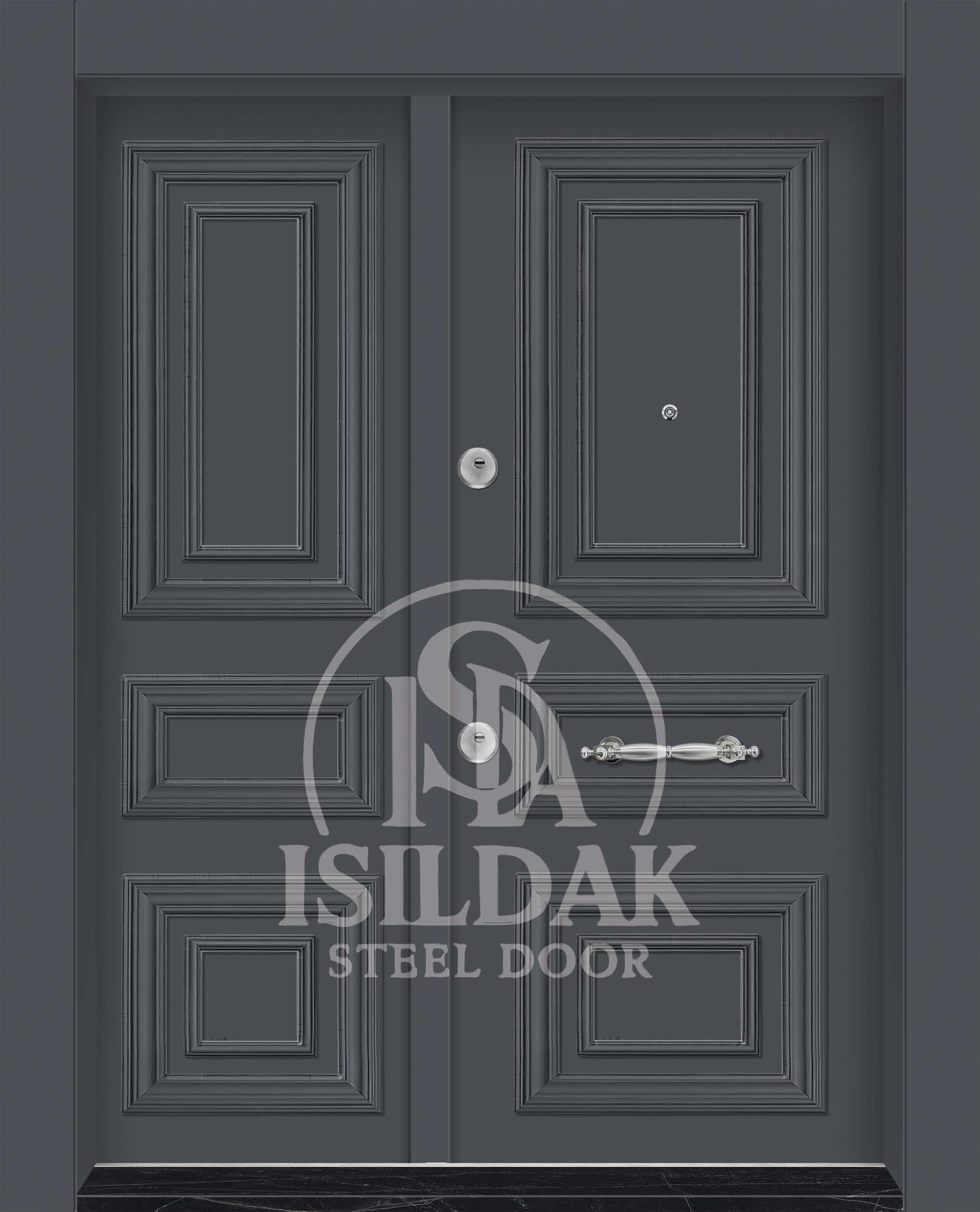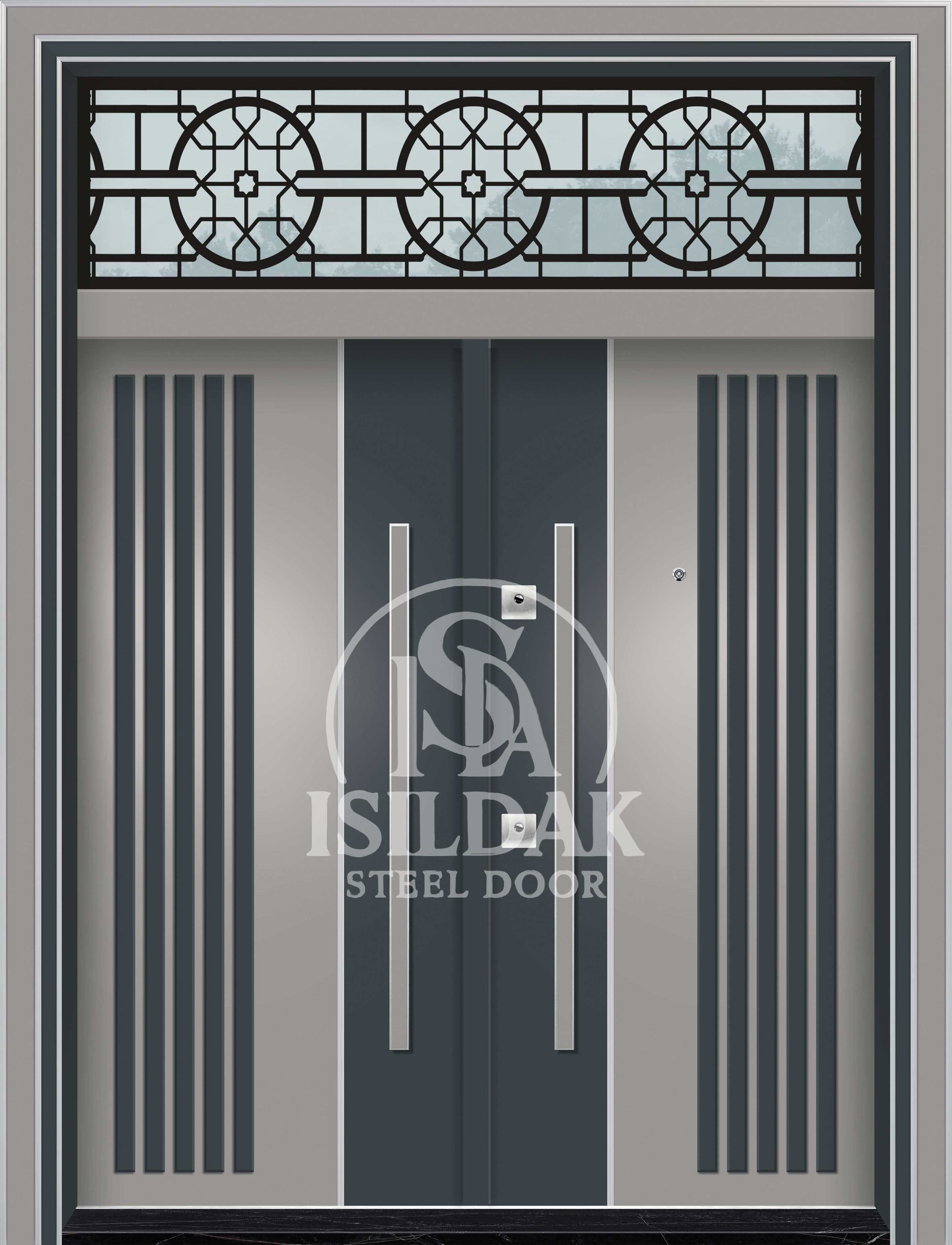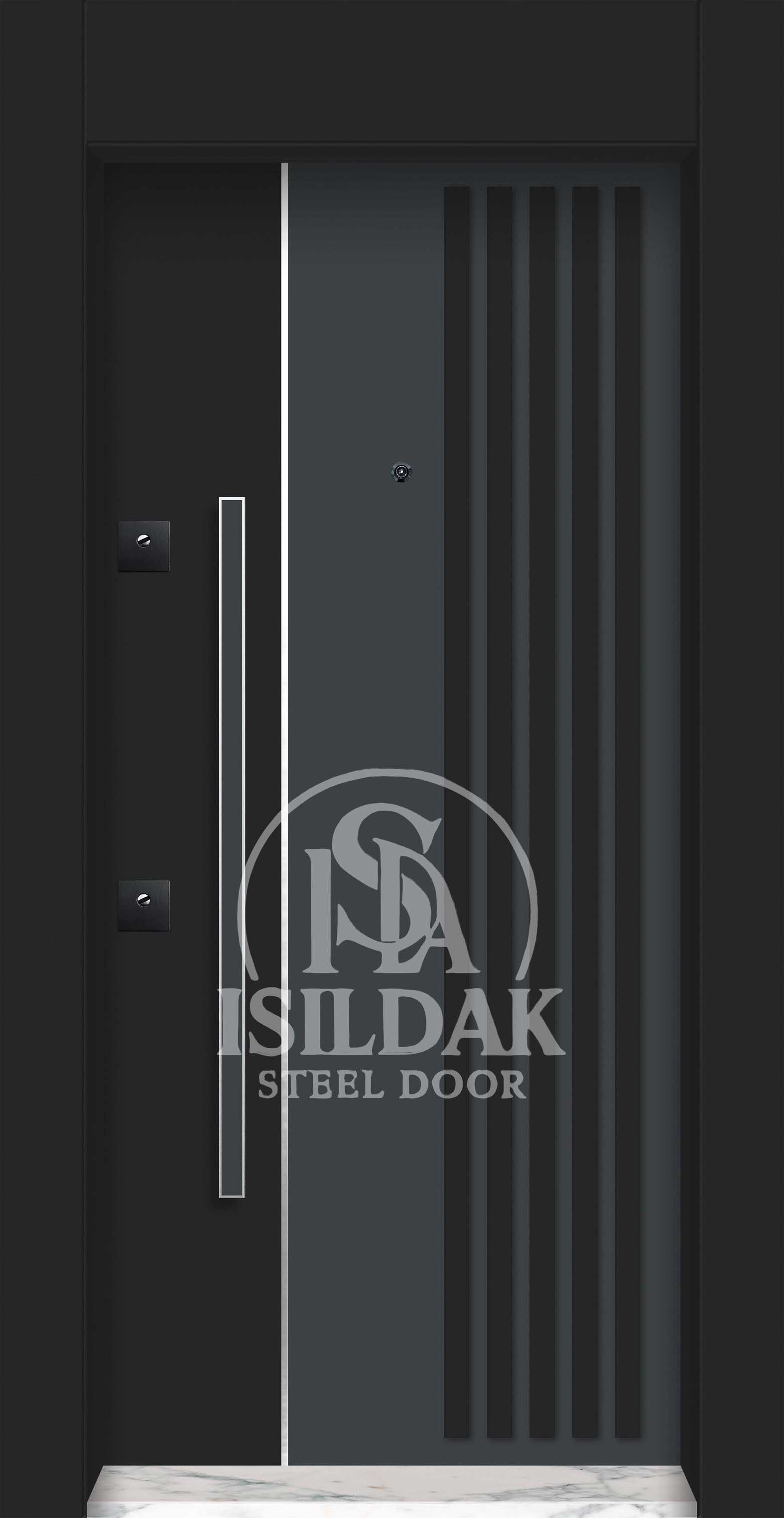
When two steel doors stand side by side, most people cannot tell them apart: both have a flat, painted surface, a handle and a few hinges. Yet one will surrender to a screwdriver, while the other can hold off and deter even a professional burglar for several minutes. This difference does not lie in the sheet; it lies in the layers hidden behind, inside and along the edges of that sheet. A steel door is not a single component but a system made up of overlapping lines of defence. In this article we reveal the layers you pay for but never see.
Security Is a Chain: The Weakest Link Decides
There is a fundamental principle in security engineering: a system is only as strong as its weakest link. You can use the thickest sheet there is; but if the lock is weak, if the hinges can be unscrewed or if the frame is not anchored, that sheet means nothing on its own. A burglar attacks not the thickest point but the weakest one: drilling the lock, snapping the cylinder with pliers, prying open the hinge side with a crowbar, or opening up the gap between frame and wall. A good door answers each of these methods with a separate layer; this is why you must look not at a single feature but at the totality of the layers.
The Outer Sheet and the Inner Frame
The steel sheet on the surface is only the first layer of defence. Sheet thickness generally ranges between 1.2 mm and 2 mm; but it is a mistake to treat thickness alone as the measure of security: a sheet with nothing behind it bends easily. The real resistance comes from the inner frame and reinforcement banding behind the sheet — the vertical and horizontal steel profiles placed inside the leaf, working like the column-and-beam system of a building. Hollow doors or those filled with styrofoam are dangerous. The gaps in the frame are usually filled with polyurethane foam; here the purpose is not security but primarily thermal and acoustic insulation. When a quality door closes it produces a solid thud; a ringing, hollow sound is the sign of weak filling.
Multi-Point Locking and Number of Bolts
In older-style doors the lock secures the leaf at only a single point, level with the handle; this is very weak against a crowbar. Modern doors, on the other hand, feature multi-point locking: when the key is turned, steel bolts driven by the central cylinder extend in three directions at once:
- Side bolts: The main bolts that enter the frame on the lock side (usually 3-5 of them).
- Top and bottom bolts: Vertical rods that pass from the top and bottom edges of the leaf into the frame; they prevent prying from the corners.
- Security pins: Fixed projections positioned opposite the hinges.
The total number of locking points generally ranges between 5 and 9. But what matters is not just the number; it is the thickness and hardness of the bolts and how deep they reach into the frame. Thin bolts, however many there are, can be pushed back by force.
The Lock Cylinder, Cylinder Armour and Anti-Drill Defence
However strong a multi-point lock may be, all its bolts are moved by a single heart: the lock cylinder (barrel). The bulk of attacks target it directly.
Anti-Drill Protection
The burglar tries to drill out the inner mechanism of the cylinder. To counter this, quality cylinders have hardened steel or tungsten carbide pins placed inside them; these pins blunt the drill bit and prolong the drilling time. The European standard EN 1303 classifies this durability of cylinders.
Anti-Snap Protection
A more common method is to grip the part of the cylinder protruding outward with pliers and break it in two (lock snapping). The defence has two layers: anti-snap cylinders with an engineered breaking point and cylinder armour (the cylinder escutcheon) made of hardened steel and mounted in front of it. For this reason the cylinder must not protrude far beyond the outer surface, and behind it there must be a steel reinforcement plate.
Hinges, Security Pins and Frame-to-Wall Anchoring
Traditional surface-mounted hinges can be forced by knocking out or cutting their pins. Concealed (hidden) hinges, on the other hand, remain between the leaf and the frame while the door is closed, removing the hinge side as a surface of attack. But even the strongest leaf loses its meaning in a frame that is not correctly fixed; because the attacker often tries to tear the door out together with its frame. Security pins are fixed steel projections placed on the hinge side of the leaf; they prevent the leaf from being removed even if the hinges are cut. The anchoring between the frame and the wall is also vital: in a quality installation the frame is fixed to the wall with steel anchor rods or clamps, and the gap is filled with cement/concrete mortar. A frame held only with foam can be torn out as a whole; real security depends as much on installation quality as on manufacturing quality.
The Standard That Measures It All: TS EN 1627 / RC Classes
The impartial benchmark that measures how much resistance all the layers provide together is the TS EN 1627 standard and the RC (Resistance Class) resistance classes it defines. This standard tests the door as a whole, including the leaf, lock, hinge, frame and installation:
- RC2: The common baseline level for residential entrances; resists efforts with simple hand tools (screwdriver, wedge, pliers).
- RC3: Offers higher resistance against a more experienced attacker and additional tools (a small crowbar/chisel).
- RC4 and above: For commercial and high-risk areas where power tools come into play.
Alongside security, fire resistance expressed in EI (e.g. EI30), sound insulation in dB and galvanised coating against rust should also be evaluated.
Frequently Asked Questions
Can I choose a secure door just by looking at the sheet thickness?
No. A thick sheet without reinforcement banding, multi-point locking, cylinder armour, security pins and proper anchoring behind it will fall short under a coordinated attack. Security is a chain; all the links must be strong together.
If there is a multi-point lock, do I still need cylinder armour?
Absolutely. All the bolts are moved by a single cylinder; if the cylinder is broken or drilled, it no longer matters at how many points the door is locked. Cylinder armour together with an anti-snap cylinder protects this heart.
Does installation really affect security?
Yes, to a decisive degree. Even a perfect door, if installed without its frame anchored and its gaps filled with concrete, can be torn out by an attacker together with its frame, without ever bothering with the lock. This is why you must question the expertise of the installation team as much as the quality of the product.
Işıldak Çelik Kapı is a steel-door manufacturer operating its production facility in İstanbul/Sancaktepe; it provides site-survey, manufacturing and installation services across İstanbul and the European Side. With the advantage of being the manufacturer, the frame, locking, reinforcement and installation details can be planned according to the project; in Bahçelievler and every other district you can take advantage of the free site-survey and measurement service and expert consultancy to discuss the right resistance class.