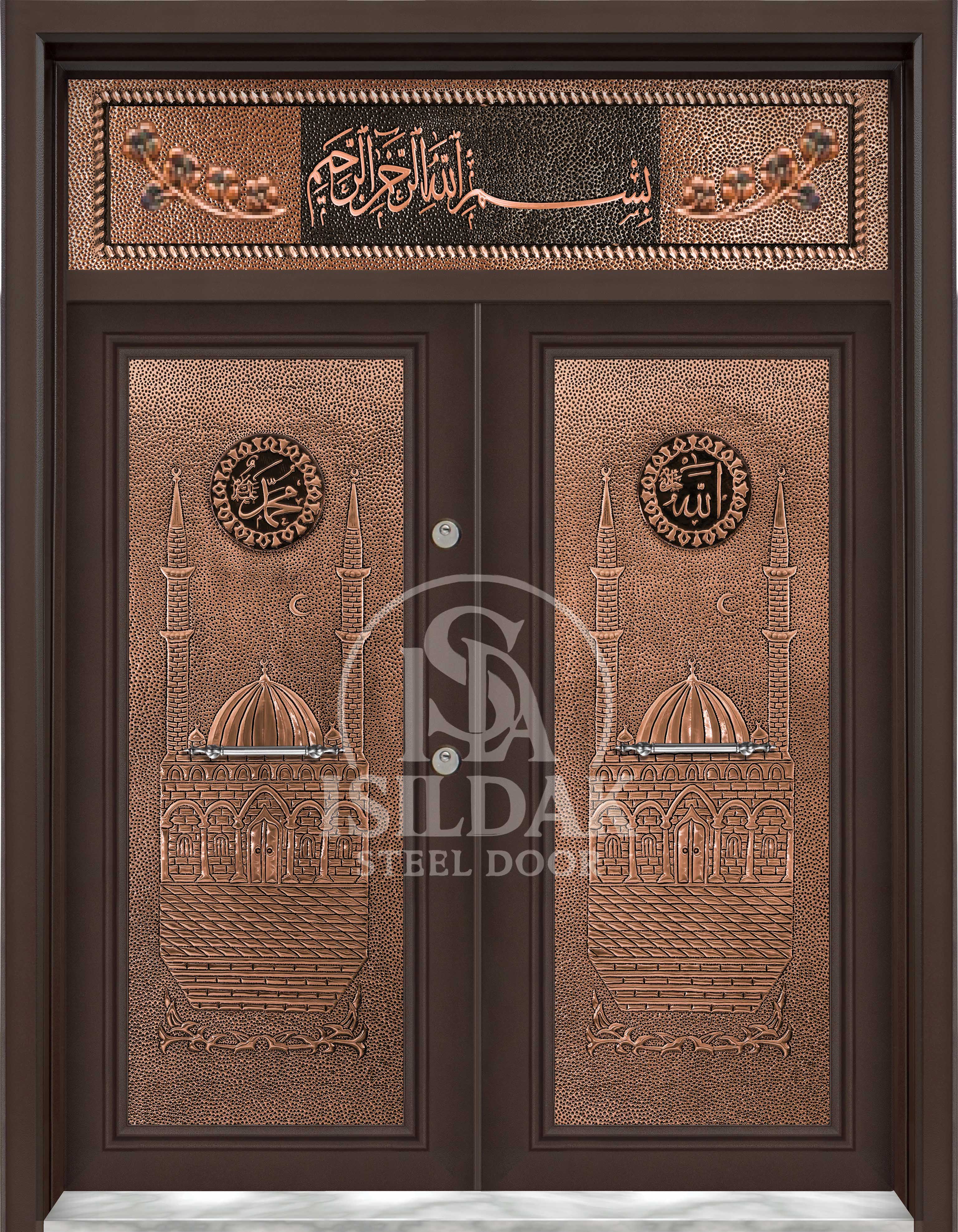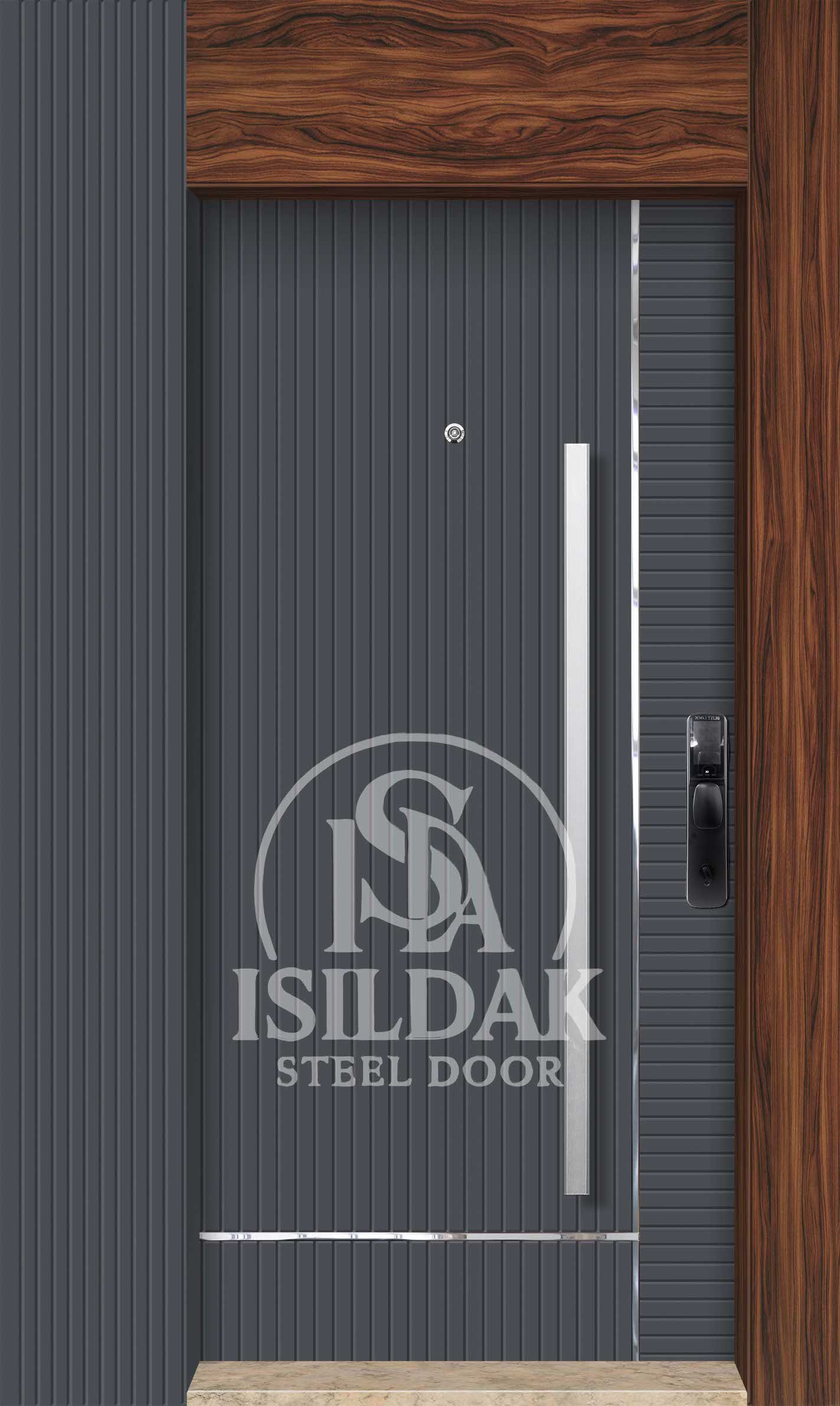
When two steel doors stand side by side, they usually look identical to an outside observer. Yet one serves flawlessly for 20 years while the other swells, rattles and develops a sticking lock within three years. Almost the entire difference lies where you cannot see it: in the thickness of the sheet steel, the type of infill, the lock and the frame. The gulf between prices is not arbitrary; behind every difference lies a concrete material choice.
Sheet Type and Thickness: The Skeleton of the Door
The foundation of durability is the type and gauge thickness of the sheet steel. DKP steel is suitable for painting; galvanized steel, being zinc-coated, is more resistant to corrosion on exterior facades but raises the cost. Thickness is the most critical and most frequently manipulated item; in quality doors the body sheet is generally between 1.2 mm and 2 mm, and as the sheet gets thicker, its resistance increases proportionally. A door made with thin 0.6-0.8 mm sheet caves inward even under hand pressure.
- 1.2 mm: The acceptable lower limit for standard apartment doors.
- 1.5 mm: The balance point for most quality manufacturers.
- 2 mm: Ideal for high security and villa/exterior doors.
When some sellers say "2 mm steel door," they mean the outer panel; ask whether the advertised thickness refers to the body sheet.
Internal Infill: The Heart of Insulation and Fire Safety
The material filling the gap between the two sheets determines heat insulation, sound insulation and fire resistance. Across three main options, the difference in cost matches the difference in quality.
Cardboard Honeycomb
This is the cheapest infill; its insulation is poor, it is affected by moisture and in practice offers no protection against fire. The hidden corner-cutting in "the cheapest steel door" is often right here.
Polyurethane Foam (PU)
This is the standard of the mid-to-upper segment. The injected polyurethane fills the internal cavity, breaking heat and sound bridges and adding rigidity. It costs more than cardboard but offers the best performance/price balance.
Rock Wool (Mineral Wool)
This is preferred when fire safety is the priority; it is a non-combustible mineral material. This is where the EI classification comes into play: the values EI 30, EI 60 and EI 90 indicate for how many minutes the door preserves its integrity (E) and insulation (I). An EI 60 fire door means roughly 60 minutes of resistance to flame and high temperature; for apartment common areas and escape routes, it is a legal requirement in certain applications.
Lock System: The Visible Face of Security
Single-point locking (the classic cylinder) grips the frame only at the mid-line; since the upper and lower corners of the leaf remain free, it is vulnerable to forcing with a lever (crowbar). A multi-point / central lock, on the other hand, distributes steel pins or bolts to upper, lower and side points with a single turn of the key, clamping the leaf to the frame on all four sides; this brings forcing it open with a lever close to impossible. A significant part of the price difference lies here.
The quality of the cylinder (barrel) is a separate item; quality doors use cylinders that are resistant to breaking, drilling and picking. A door set's resistance to attack is measured by its RC (resistance class) according to the TS EN 1627 standard: RC2 is the baseline for home doors, while RC3 and above offer higher security. It is not enough for the label to read "multi-point lock"; ask for the number of pins.
Frame, Hinges and the Unseen Details
No matter how solid the leaf is, if the frame is weak, security collapses; because at the moment of forcing, the force is borne by the frame. In quality doors the frame is manufactured from a single bent piece of steel profile, fixed to the wall with steel dowels or welded "claws," and contains reinforcement sheet in the area of the lock strike plates. In cheap production, the frame is the item most often cut back; the customer looks at the leaf, not the frame. For hinges, the ball-bearing, adjustable type is long-lasting.
- Surface coating: The UV/moisture resistance of stove paint, laminate, PVC membrane and wood differs; a cheap membrane on the exterior can blister.
- Weatherstrip (gasket): A double row of quality weatherstrip increases insulation and provides a "solid" close.
- Threshold and peephole: These complete the seal and are items neglected in cheap doors.
Where Is the Cost Cut on a Cheap Door, and How Do You Strike the Right Balance?
If a door is far cheaper than expected, the savings have almost always been made on items invisible to the eye:
- Thinning of the body sheet (0.6-0.8 mm instead of 2 mm).
- Cardboard honeycomb infill instead of polyurethane or rock wool.
- A single-point lock and a cylinder with no pull protection.
- A thin, unreinforced frame and hinges without ball bearings.
These items are not visible at installation; the difference emerges in the first winter's heat loss, the summer's door swelling, and the lock sticking in later years. To strike the right balance, request the sheet type and thickness, the infill material, the number of lock points and the frame gauge thickness in writing. Where fire protection is needed, ask about an EI-class fire door, and for security, about the TS EN 1627 / RC class.
Işıldak Çelik Kapı is a manufacturer that transparently specifies its sheet, infill, lock and frame choices at its production facility in Sancaktepe, Istanbul; with free site survey and measurement service across Istanbul and the European Side, our expert team evaluates your door choice on site.
Frequently Asked Questions
Why is sheet thickness so important in a steel door?
Sheet thickness determines the door's resistance to impact and forcing. A 1.2-2 mm body sheet provides sufficient strength, whereas thin 0.6-0.8 mm sheets cave inward even by hand. Confirm that the advertised thickness refers to the body sheet, not the panel.
Which is better, polyurethane infill or rock wool infill?
The two serve different purposes. Polyurethane offers superior performance/price balance in heat and sound insulation; rock wool is used for fire resistance and is the infill of EI-class fire doors. Inside an apartment, well-applied polyurethane meets most needs.
Why does the cheapest steel door cost more in the long run?
The savings are made on unseen items such as thin sheet, cardboard infill, a single-point lock and an unreinforced frame. Within a few years these doors develop swelling, sagging and lock sticking; with repairs and replacement, the total cost exceeds that of a quality door.