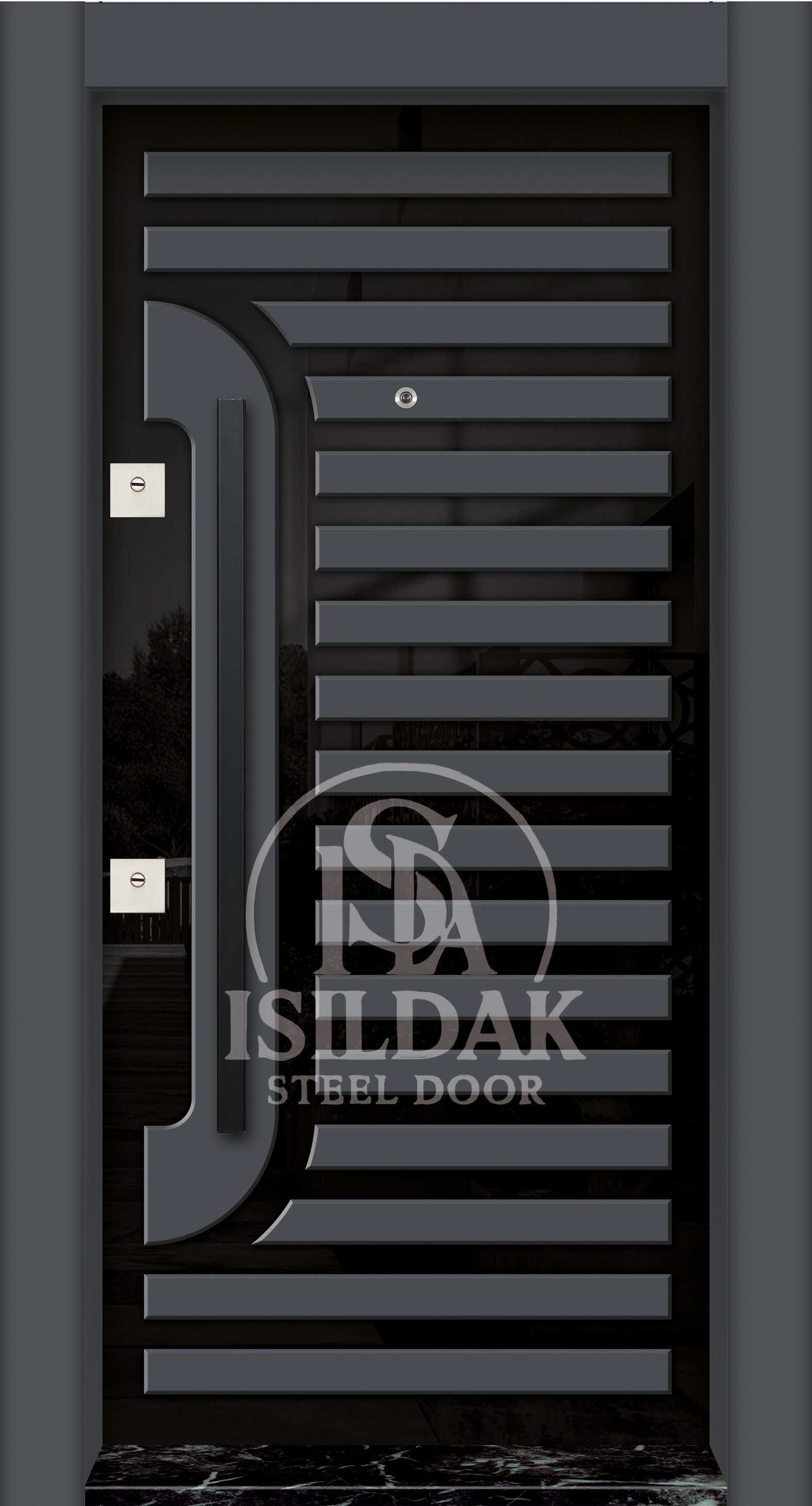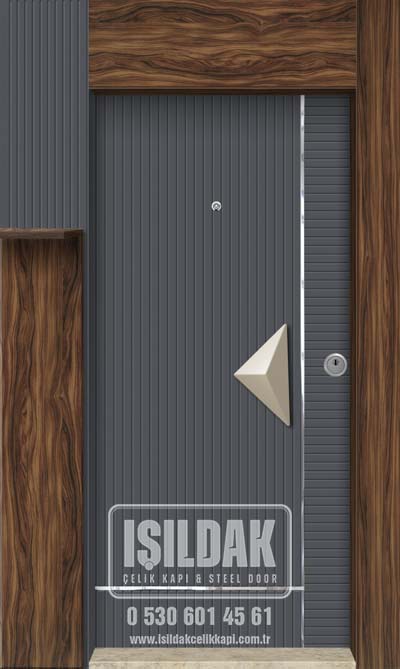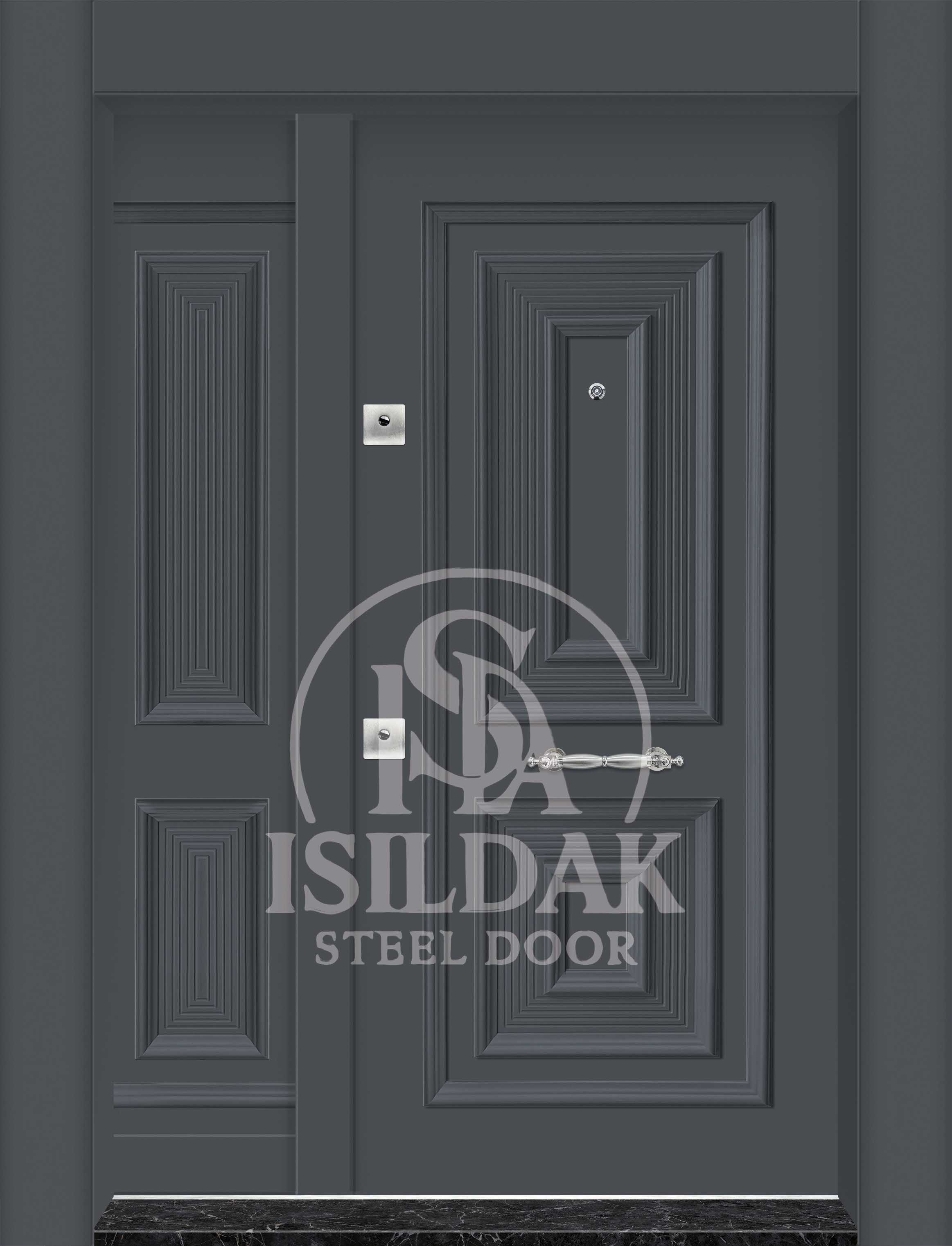
Are you wondering why steel door prices vary so much? In fact, many technical details determine the price. In this article, we list and explain 7 key factors affecting steel door prices. Knowing these factors will give you an advantage in choosing the right door.
1. Sheet Thickness and Steel Quality
The thickness of the steel sheet used in the door body directly impacts security and price. Sheet thicknesses on the market range from 0.8 mm to 1.5 mm. Thicker sheets (e.g., 1.2 mm or 1.5 mm) provide higher security but increase cost. Additionally, the quality of the steel used (cold-rolled, galvanized, etc.) affects durability and price.
2. Filling Material and Insulation
The interior filling of a steel door determines heat and sound insulation as well as fire resistance. Common filling materials include:
- Polyurethane foam: High insulation, fire-resistant, lightweight.
- Rock wool: Excellent fire resistance, good sound insulation.
- Honeycomb cardboard: Economical but low insulation.
High-quality fillings like rock wool or polyurethane increase the price, while low-quality materials can cause problems in the long run.
3. Locking System and Security Hardware
The door's locking mechanism is one of the most critical factors determining security level. Options such as double-sided locks, bolt systems, alarm locks, or smart locks directly affect the price. Additionally, certified locks (e.g., SKG 3-star) enhance security but also raise costs.
4. Fire Resistance Certification
Fire-resistant steel doors are manufactured to withstand fire for a specific period, classified into 30, 60, 90, or 120 minutes. Obtaining a fire door certificate (TS EN 1634) increases production costs but is critical for life safety. This feature is especially preferred in workplaces and apartment flats.
5. Paint and Surface Coating
The type of paint used (electrostatic powder coating, polyester paint, wood-grain lamination) affects the door's appearance and durability. Quality paints are resistant to impact, scratches, and UV rays. Special color or pattern options can increase the price. Additionally, galvanized coating for rust protection is another factor that raises the price.
6. Brand and Manufacturing Quality
Well-known and reliable brands offer stricter quality control processes and longer-lasting products. Warranty periods, after-sales services, and spare parts availability also affect brand value. Low-quality materials used in cheap brands can cause problems quickly, so the price-performance balance should be carefully evaluated.
7. Installation and Additional Services
Professional installation is essential for the door to function properly and ensure security. Some companies offer free installation, while others charge extra. Additional services such as removing the old door and transportation also affect the total cost. Materials used in installation (anchors, screws, sealing tapes) should be of high quality.
In conclusion, steel door prices vary greatly depending on technical specifications and brand. When choosing the most suitable door for your needs, pay attention not only to price but also to factors such as security, insulation, and durability. Remember, a steel door is a long-term investment.