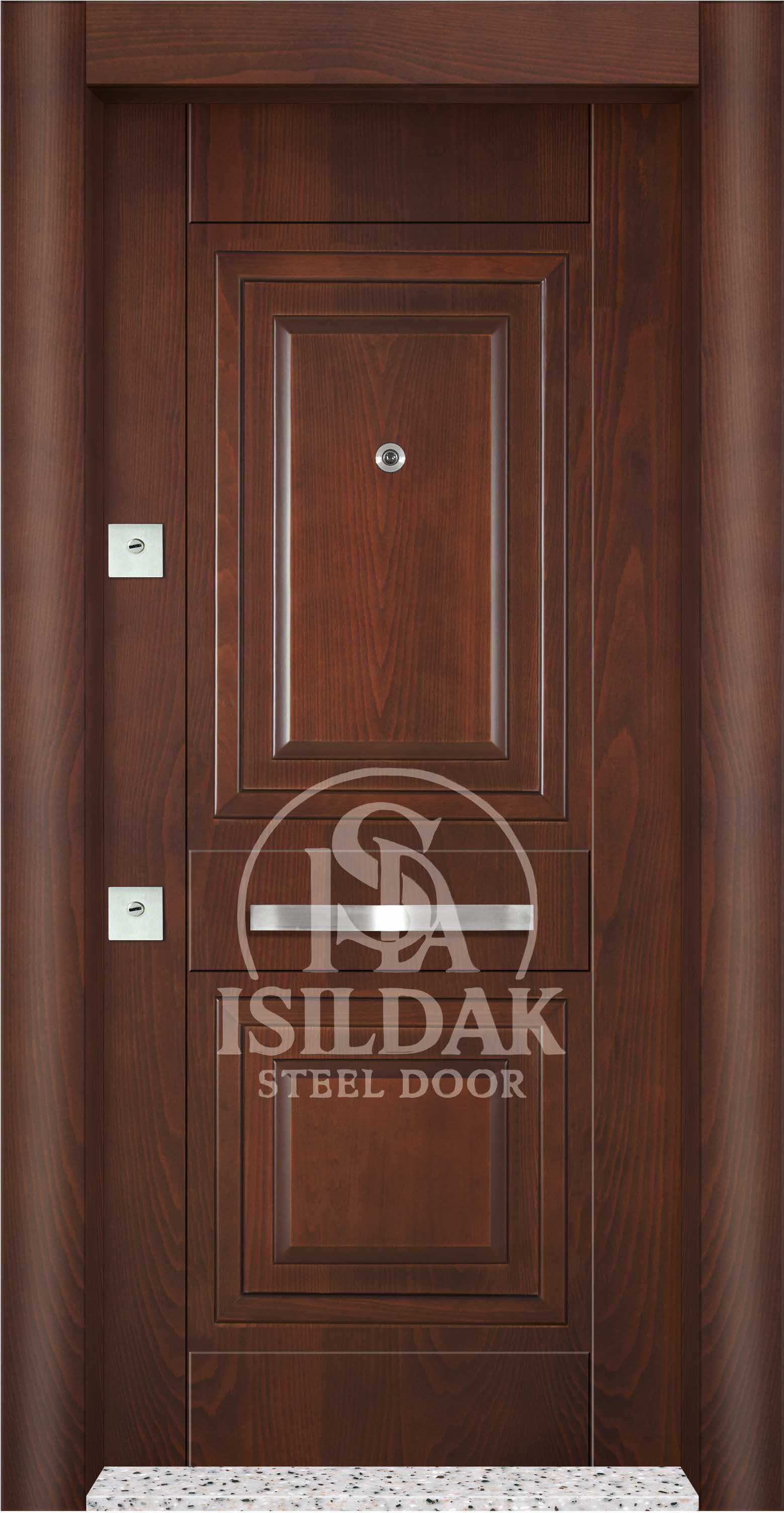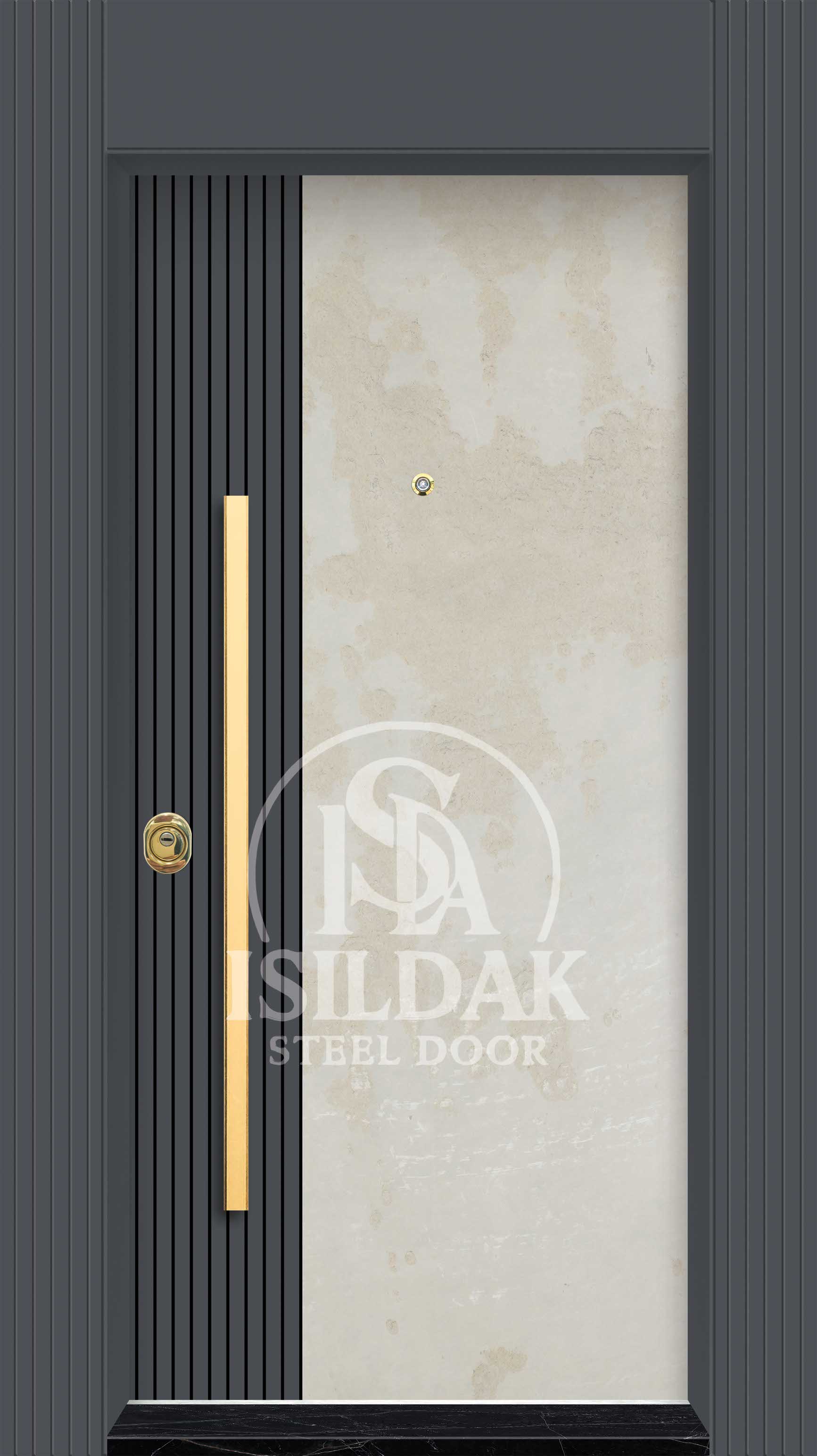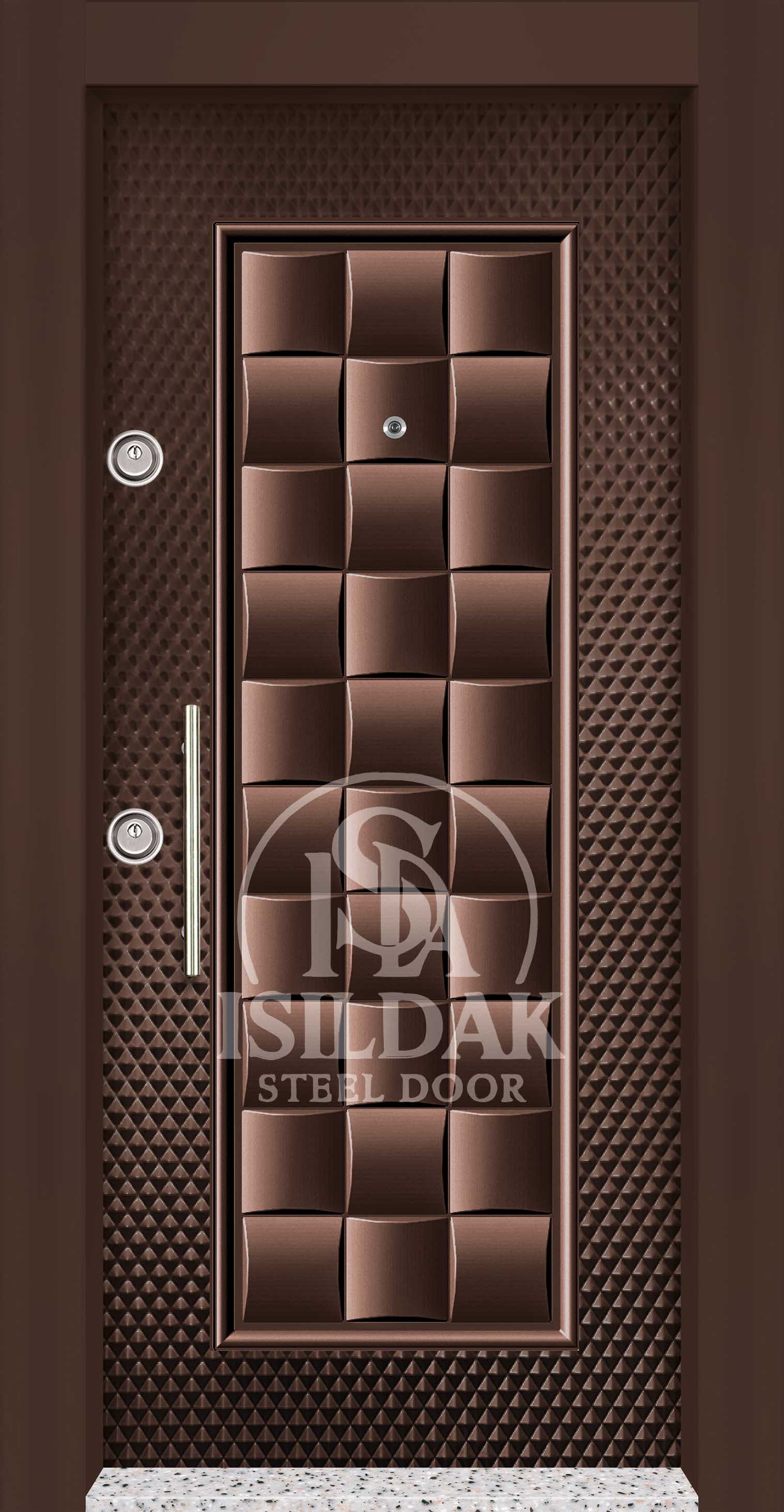
An apartment building's entrance door is opened and closed hundreds of times a day; it is the most fatigued component of the building and the one that carries the greatest security load. Most managers make this decision based on price alone, only to face rusted hinges, a leaf that constantly stays open, a malfunctioning intercom, and a non-compliant opening direction two years later. Yet a correctly chosen door serves trouble-free for 15-20 years, provides thermal insulation, and adds to the building's value. This guide covers the technical and legal items you need to know before requesting a quote.
Resistance to Heavy Communal Use
An apartment door might be opened 10-15 times a day; a building entrance door can reach 200-400 cycles. The decisive criterion is the material thickness together with the resistance of the hinge and lock systems to repeated loads. For the leaf sheet, choose at least 1.2-1.5 mm DKP or galvanized steel sheet; anything thinner sags under heavy use.
- Hinge: Bearing (ball) hinges and adjustable 3D hinges carry the heavy leaf without letting it drop.
- Surface protection: Electrostatic powder coating or a galvanized substrate is the only real solution against rust; for models facing the exterior facade, galvanized sheet is essential.
- Gasket: EPDM gaskets ensure a tight seal and reduce noise; a double gasket softens the slam.
Automatic Closing: The Hydraulic Door Closer
A building entrance door being left open is the number one cause of heat loss and security vulnerability. The solution is a door closer (hydraulic closing arm) system; it closes the leaf at a controlled speed, without slamming and seating it fully. For very wide or heavy leaves, a floor-embedded floor closer is more durable. The closer should be selected to match the EN 1154 force class (EN 2-EN 6 according to leaf weight): insufficient force cannot fully close the door, while excessive force makes it hard to open.
Access Control: Intercom, Card, and Code Systems
A modern building entrance door is an access control point beyond the mechanical lock. The electronic infrastructure (cable channel, lock housing, hinge cable) should be planned from the outset; adding it later is costly and problematic.
- Intercom / video door phone: Allows you to see the door from your apartment and open it remotely; video systems are superior in terms of security.
- Electric strike: Opens with the signal coming from the intercom or card. The lock's behaviour in a fire (fail-safe, opening / fail-secure, staying locked) must be chosen in compliance with regulations.
- Card / code / proximity reader: Eliminates the circulation of keys and the risk of loss; a lost card is deleted from the system, preserving security.
Fire Escape Direction and Regulations
A building entrance door is also an evacuation point and falls within the scope of the Regulation on the Protection of Buildings from Fire. The most common mistake is the opening direction: doors on an escape route must open in the evacuation (escape) direction so that the door does not jam in a moment of panic. In systems with electronic locks, it must be possible to open them from the inside by hand or with a panic bar even if the power is cut. At certain heights and use classes, a certified fire door is required; these doors are rated by their EI class. EI 30 or EI 60 indicates that the door buys time for evacuation by holding back flame and heat for 30 or 60 minutes; an intumescent (expanding) strip and automatic closing are mandatory. Confirm the required class from the approved fire project.
A Steel Building Door Instead of Wrought Iron
Wrought iron (forged iron) doors, common in older apartments, look elegant but carry a weakness for a building entrance: a hand can be reached through the open patterns to open the lock, they offer no insulation, and they rust over time. A steel composite door is clearly superior at this point.
- Security: A full sheet leaf and a multi-point lock offer a barrier incomparable to the open structure of wrought iron.
- Insulation: A polyurethane-filled steel leaf provides thermal and acoustic insulation; it lowers the heating bill.
- Aesthetics: An elegant appearance is achieved with laser-cut patterns, stained glass, and wood cladding, without compromising on security.
To evaluate security objectively, the RC (Resistance Class) resistance classes in the TS EN 1627 standard are taken as reference. For apartment entrances, the RC2-RC3 range generally offers balanced protection; as the class rises, the lock, hinge, and frame's resistance to forcing increases. For models using glass, tempered or laminated safety glass should be preferred.
Budget, Decision Process, and Warranty
Since a building entrance door is a common expense, the decision must be made on a legal footing. As entrance door renewal is generally considered a change to a common area under the Condominium Law, the decision must be taken by the general assembly of owners with the appropriate quorum (a majority of both number and land share) and recorded in the decision book. A practical road map:
- Needs assessment: The leaf dimensions, opening direction, fire route status, and desired access control are clarified.
- At least 3 quotes: Obtained with the same technical specification (sheet mm, number of lock points, closer class, warranty).
- Decision and contract: The choice is voted on; the payment plan, installation date, warranty, and service conditions are put in writing.
Think of the cost not in absolute figures but in factors: sheet thickness, lock and closer class, electronic access system, and fire certification determine the total price. The most critical item is the availability of spare parts and service; a cheap but unsupported door becomes expensive when a part cannot be found.
How should an apartment entrance door's opening direction be according to regulations?
As a rule, doors on a fire escape route must open in the outward escape direction; this way the door does not jam in a moment of panic. If there is an electronic lock, it must be possible to open it from the inside by hand during a power outage. The exact requirement is confirmed from the approved fire project.
Does replacing a wrought iron door with a steel door require the approval of all owners?
Since the entrance door is a common area, the change is made by a decision of the general assembly of condominium owners; the legal majority quorum is generally sufficient, and unanimity is not required. Recording the decision in the book prevents subsequent objections.
Can intercom and card access be added to the door later?
They can be added, but it is cleaner and cheaper if the cable channel, electric lock housing, and hinge cable passage are planned at the manufacturing stage. Ordering the door ready for electronic infrastructure provides flexibility in the future.
Buying the door directly from the manufacturer not only lowers the intermediary margin but also allows details such as the dimensions, sheet thickness, and lock-closer class to be tailored specifically to the building. Işıldak Çelik Kapı manufactures building entrance and apartment doors at its production facility in Sancaktepe, Istanbul; it serves Istanbul and the European Side, and by requesting a free site survey for your building, you can obtain expert consultation on the correct dimensions and access system.